Hidden side of Saigon
Slums, gangsters and the flow of time

District 4, after lots of wars, people have to migrate from their own town to a new place, a young city which is Ho Chi Minh City, and District 4 was a perfect place in that moment eversince. Because not only near the Center - District 4 that the government and rich focused on but also the complexity of geography of District 4 allows them to commit a crime without easily getting caught. Due to the advantages, the gangsters from all over the country came to District 4 to take this place. This District used to be the most modernized in 1975, however, it was left after District 1 and due to the density of criminals over here, the government would not want to pour much money just to “raise the crime” in such a place. So until now, the modernization usually applied to suburbs or the heart of the city. Although District 4 still got the developments, it were not as much as the other Districts.
Slums


Although some modern buildings have been constructed, giving the district a unique blend of modern and vintage architecture, District 4 has not received the level of modernisation it deserves. It is neither as modernised as newer urban areas such as Go Vap District nor as bustling as District 1. Remaining slums up till now.
Near District 4 was District 1, the center of the city. The place where the government took the most care, until now. Creating a chance for this place to also have the chance to develop urban planning. The people want to and need to; however, it ended up with a ruined reputation, and the government could not help. Leaving District 4 with old and run-down residential areas like nowadays. Although there were some developed buildings involved, making it look like a combination of modern and vintage. After all, District 4 did not receive the modernization it had to. Was not as modern as New Urban like Go Vap District, but also not as bustling as District 1
Surrounded by harbours and rivers. District 4 used to be a “poor land”, with run-down residential areas. Not only that, but the place also had social issues as a result of complex and narrow alleys and lax security. These were suitable conditions for criminals to commit crimes, as the police could not catch them.
Before, there were no local people here; laborers migrated due to the war that happened in the north. However, those poor laborers were given a bad reputation because District 4 was famous for endless prostitution and street muggings.
"Taught you how to stealing wallet before knowing how to read, taught how to shanking people before saying the word of love."
"Ở đây người ta học móc túi trước khi biết mặt chữ. Học cách cầm dao chém người trước khi nói tiếng yêu thương."

GANGSTERS
In 1975, District 4 was one of the dangerous areas in Saigon. Poverty, high population density, housing along canals. Records from the period highlight issues such as violence, territorial conflict, theft and robbery. After 1975, criminal activity persisted, compelling the authorities to implement various measures to restore order
.jpg)

For example, one of the most notorious gangster is known as Dai Cathay an underworld boss in Saigon before 1975. A criminal with a childhood of poverty spent on the streets, having dropped out of school early. Dai Cathay gathered other street children around him and gradually ascended to become one of the most powerful leaders in Saigon's criminal underworld. However, his involvement in illegal activities repreatedly drew the attention of the police, eventually leading to his incarceration in a prison camp on Phu Quoc Island. Around 1967, Dai Cathay vanished, leaving behind numerous rumors regarding his ultimate fate
As the days passed, District 4 seemed to be trapped in an endless cycle of violence, filled with people screaming and cursing. However, beside the chaos, countless stories of sworn brothers and ride-or-die companions emerged, forged through the hardships of those years.
FlOW OF TIME
Bich Hoa Alley

Bich Hoa Alley: Bich stands for “wall,” and Hoa stands for “paintings”; Bich Hoa is basically known as the paintings on the wall. In Italy, it is called Fresco, a technique that draws on plaster so that colors can stick deeply into the wall and remain permanent. Bich Hoa alley recently is popular in public facilities in order to attract tourists and encourage local or not local to come and check out these places.
Besides the run-down residences across District 4, Bich Hoa Alley is also a significant part of District 4. And it becomes even more special when it’s in District 4. Before, every wall across the streets was worn out with the shade of rusted and rubbed paints, so some artists came up with “graffiti” - not like the graffiti you would see in such other places like America; we would paint on the wall, but with vibrant colors and explicit educational meanings of educations. Those paintings on the walls not only promote the beauty of the city but also encourage the local people to raise our community awareness.


In some sorts of art, the Bich Hoa alley could celebrate the change of new things, or just make schools more livable for small students or kindergarteners. However, to some extent, some paintings serve further meanings, for example, domestic violence. It is painted to keep reminding local citizens of the severe trauma from the smallest unit of society- the family.
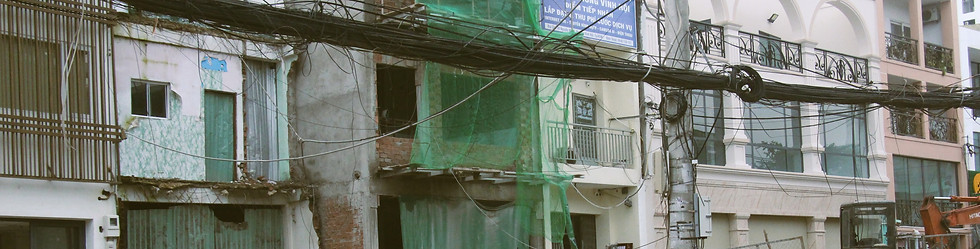
Although District 4 was much safer nowadays, its old urban layout had been modernised. Not all social issues had been resolved; rather, many of the gangsters had either already been sent to prison or had grown too old to commit crimes (and, of course, they had no “heirs” to take their place). As a result, District 4 became much safer than it had been in the past. However, whenever you asked older local residents about the area, they would tell you that it was dangerous - the gangsters’ territory! Nowadays, though, the biggest problem was the disastrous traffic rather than crime.
The old buildings, as well as those under construction, were still there. However, people now walked past them as if they were nothing out of the ordinary, no longer feeling the fear they once had.